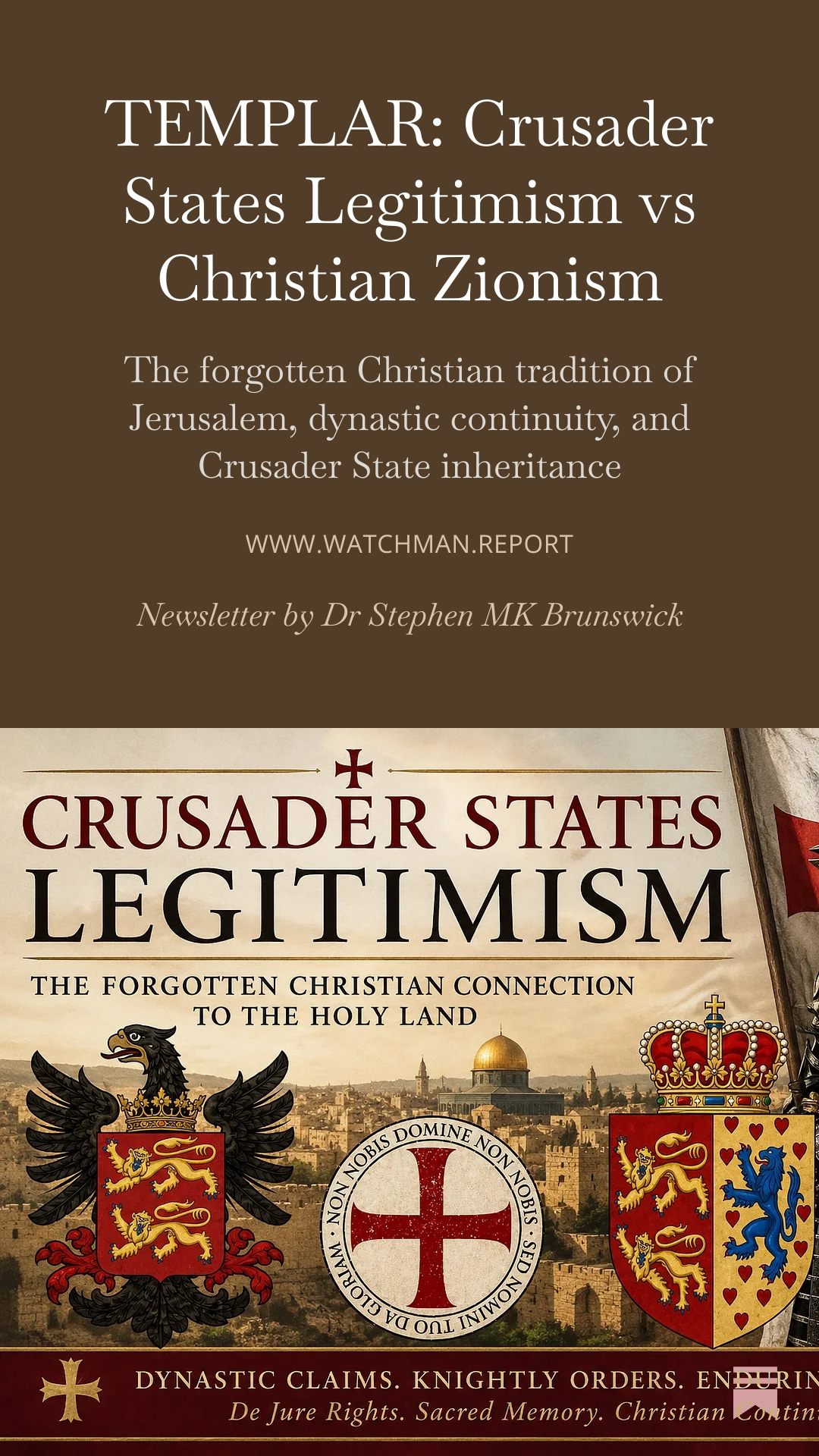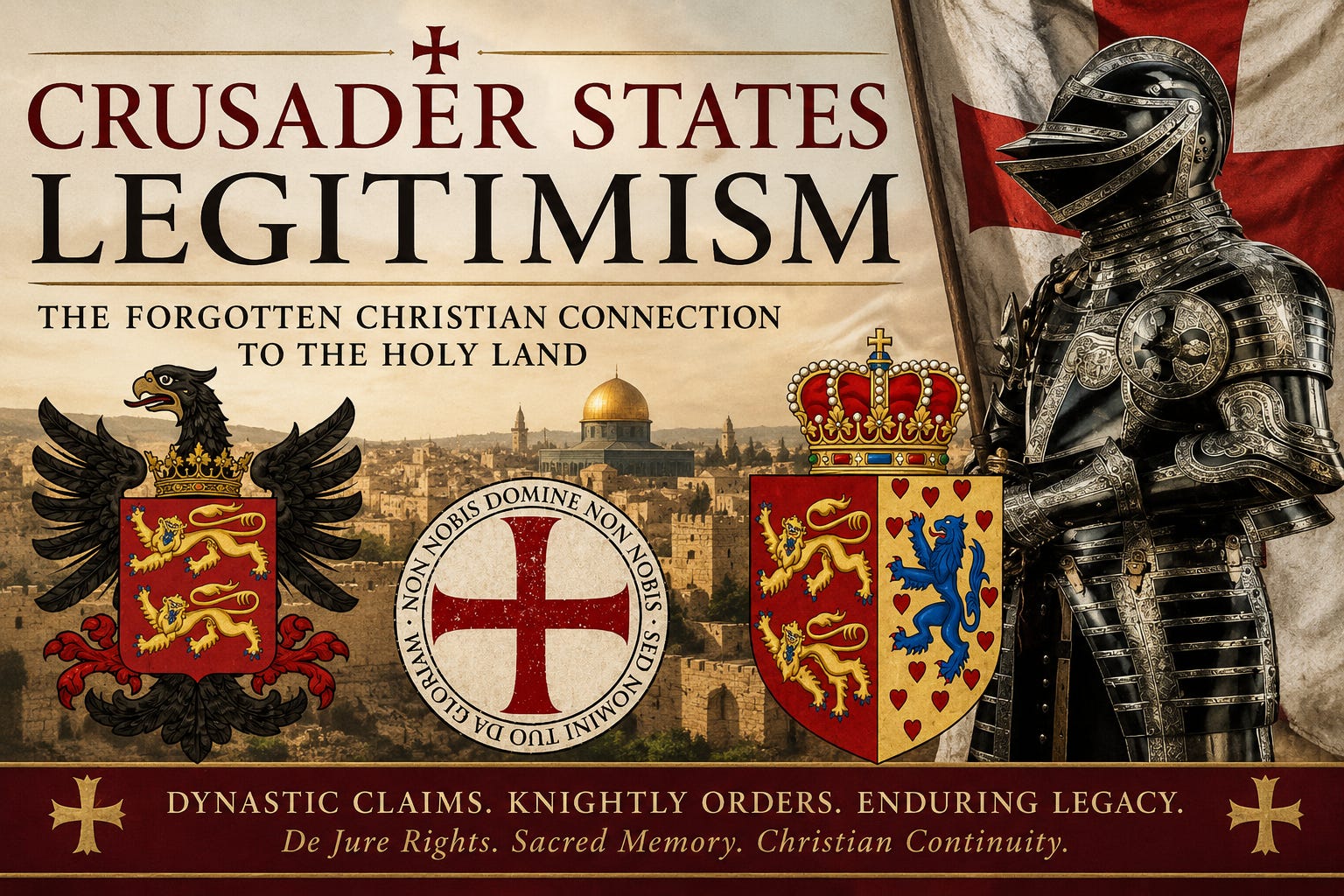
For many modern Christians, any discussion of Jerusalem, the Holy Land, or Christian continuity in the region is immediately dismissed under the label of “Christian Zionism.”
But what if Christendom possessed its own entirely separate historical tradition regarding Jerusalem long before modern Zionism ever existed?
For centuries after the fall of the Crusader States, European dynasties, knightly orders, and noble houses continued to preserve:
• hereditary claims to the Kingship of Jerusalem
• arms of pretension tied to the Holy Land
• pilgrimage crusade traditions
• dynastic continuity of the Crusader Kingdoms
• Templar and chivalric memory
• sacred custodianship of Christian holy places
This forgotten framework may best be described as:
“Crusader States Legitimism”
Our newest study explores:
• the continuation of Templar traditions
• Angevin, Bourbon, Sicilian, Guelph, and Brunswick connections
• the Orders of Santiago, the Garter, and related dynastic knightly traditions
• de jure vs de facto sovereignty
• why modern Christians increasingly sever themselves from Jerusalem history
• and how older Christendom viewed the Holy Land through continuity, pilgrimage, nobility, and sacred inheritance rather than modern political categories
Featuring discussion of:
Knights Templar, Kings of Jerusalem, crusader kingdoms, Celto-Saxon heritage, Jerusalem pilgrimage traditions, dynastic orders, and the preservation of Christian civilizational memory.
Read the full article:
https://watchman.news/2026/05/crusader-states-legitimism/
HMSH Stephen M.K. d’Este-Guelph, Duke de jure, KT
Prince of Wolfenbüttel-Brunswick
Grandmaster (2013–Present)
Brunswick Grand Commandery of the Knights Templar
Chancellery: chancellery@brunswicktemplar.org
https://brunswicktemplar.org
Share this article