One of our topics at the Watchman Lounge is “First Safe Country” and the immigration fraud. However this is part of a bigger set of talks we are having on the “Viability of the Remigration Pact”. Please see some of those topics listed below.
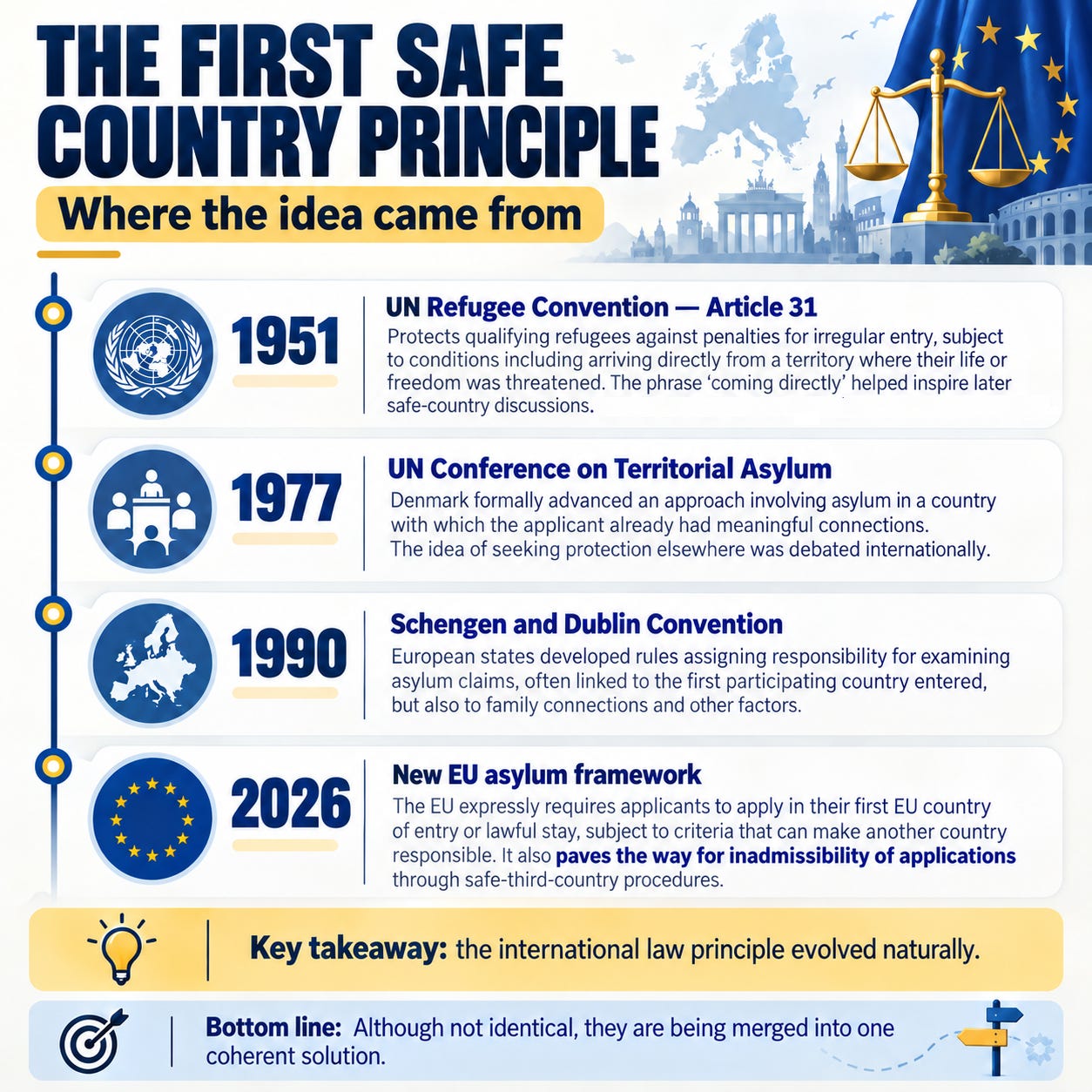
A lot of people just think the “First Safe Country” principle just came out of thin air. Few people know anything about this and just assume it's something activists just made up. However, its established in related theories since 1951 (and previous). It's a winning idea in international law.
Now the 2026 New EU Asylum framework that did pass into law have put some teeth into this neglected principle of natural and civil law.
Join us on the regular Watchman Lounge — Round Table Live Broadcast.
(email info@st-andrewsocc.org if interested in participating)

Remigration, European Demographics & Citizens’ Rights
Topics in the Watchman Lounge · October 2026
Policy and implementation
- 1. The Remigration Pact: Is It Actually Achievable?
[Examine the five articles of the Save Europe Act. Which measures can actually be implemented, what legal obstacles exist, and how much of the public expectation goes beyond the document?]
- 2. Why the European Commission Rejected the Save Europe Act
[Examine the Commission’s objections, the language concerning non-Western immigration, and whether the petition could be legally revised or resubmitted.]
- 3. The First Safe Country Principle: 1951–2026
[Trace the history from Article 31 of the Refugee Convention through the 1977 asylum conference, the Dublin system, and the 2026 EU framework. Use the infographic already prepared.]
- 4. The New 2026 EU Asylum Rules and Inadmissibility
[How do first-entry responsibility and safe-third-country provisions operate? Under what circumstances can an application be declared inadmissible without examining the underlying asylum claim?]
- 5. Who Would Actually Enforce Remigration?
[Compare America’s ICE with existing Dutch and EU immigration agencies. Examine staffing, transportation, detention capacity, administrative decisions and international readmission agreements.]
- 6. Voluntary Departure Versus Compulsory Removal
[Distinguish people without lawful residence from lawful residents and citizens. How many people would actually be affected by each of the pact’s proposed measures?]
- 7. The Financial Cost of Remigration
[Estimate the administrative infrastructure, courts, enforcement, transportation and incentives required. Would implementation cost more than the savings proponents anticipate?]
Birth rates, communities and the Netherlands
- 8. Birth Rates and Birthrights: The Missing Half of Remigration
[Even if every proposed immigration restriction succeeded, would Europe’s existing low fertility and population aging remain unchanged? What would long-term community renewal require?]
- 9. Does a Community Need Five Children Per Woman?
[Explore your community-sustainability hypothesis, comparing fertility rates with generational retention, migration away from home, marriage, family formation and local cultural continuity.]
- 10. Why National Fertility Statistics Don’t Tell the Whole Story
[Distinguish maintaining a country’s total population from sustaining a particular village, church, school or cultural institution across generations.]
- 11. Would Remigration Leave Dutch Towns and Villages Empty?
[Explore scenarios involving vacant housing, consolidation of services, declining municipalities, aging residents and changes in population distribution.]
- 12. The Dutch Farm Crisis and the Future of Rural Communities
[Investigate nitrogen restrictions, farm cessation, agricultural land policy and housing development. Separate actual Dutch government measures from exaggerated claims about farm closures.]
- 13. Europe’s Aging Population: Who Will Maintain Everything?
[Examine labor shortages, elder care, pensions, infrastructure, automation and whether a shrinking working-age population can sustain existing public services.]
- 14. Churches Closing, Religious Communities Changing
[Investigate church closures, mosque openings, changing religious participation and the circumstances under which historic congregations can sustain themselves.]
- 15. Schools, Families and the Loss of Local Community Life
[Discuss parental choice, education, local schools, intergenerational households, community programs and the institutions needed to pass traditions to another generation.]
Public accountability and documented impacts
- 16. Crime Statistics: How Reliable Are the Numbers?
[Investigate police reporting, changes to offense categories, underreporting and whether administrative practices make it harder to evaluate crime trends accurately.]
- 17. Britain’s Grooming-Gang Scandals and Institutional Failures
[Examine documented child sexual exploitation cases, local-authority failures, policing and victim protection. Distinguish verified findings from unsubstantiated nationwide victim estimates.]
- 18. French Urban Renewal: Why Were Some Neighborhoods Demolished?
[Investigate French redevelopment programs, social housing, deterioration, municipal decisions and the documented causes of demolition, rather than presuming immigration alone explains each project.]
- 19. Property Depreciation, Public Safety and the Cost to Households
[Can changes in crime, public services, neighborhood conditions or government policy be connected to measurable financial harm? What evidence would establish causation?]
Citizens’ rights, lawsuits and government negligence
- 20. Can Citizens Sue Governments for Negligent Administration?
[Examine Dutch law, EU obligations and the requirements for establishing a specific unlawful government act, an enforceable right, causation and damages.]
- 21. The €25,000 Dutch Court Strategy — Without an Attorney
[Examine the kantonrechter procedure, litigation costs, suitable claims and whether a focused government-liability case can be pursued without mandatory legal representation.]
- 22. Different Agencies, Different Negligence, One Injured Family
[Explore your proposed method of separately documenting distinct wrongful acts by different government bodies, including independent duties, separate injuries and potentially shared liability.]
- 23. Calculating Family Damages Across Generations
[Explore how to distinguish actual financial losses, property depreciation and identifiable personal injuries from speculative multigenerational demographic or cultural impacts. Could an otherwise valid claim support a limited damages request?]
- 24. From Dutch Courts to the European Court of Justice
[Examine national proceedings, preliminary references to the CJEU, European human-rights complaints, collective actions, court costs and the legal routes available to citizens.]
Yours in Christ
Rev Dr Stephen MK Brunswick
https://watchman.news