


Friends,
Why do some Germans today seem drawn to Russia’s outward display of sovereignty?
It isn’t simple “pro-Russia” politics.
Much of the resistance to globalized governance — visible in parts of AfD’s support base — comes from eastern Germany, regions that lived under Soviet occupation and KGB oversight for more than 40 years, well into the 1990s. People there learned firsthand how centralized control works, how narratives are enforced, and how populations are managed. Many now recognize similar pressures emerging from the West — through shaming, ideology, and bureaucratic coercion — and react accordingly.
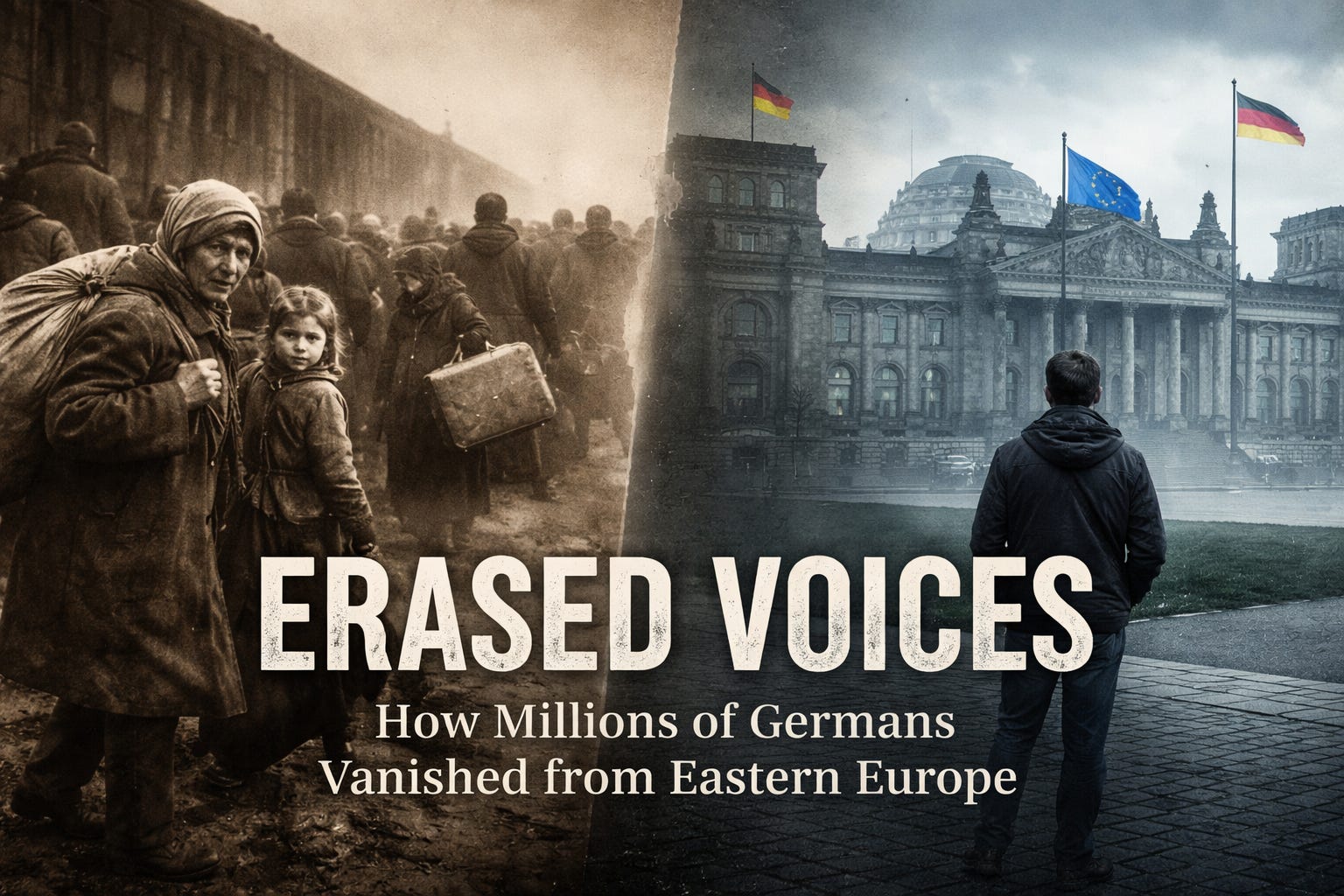
That reaction didn’t appear out of nowhere.
In Part 1 of our new Watchman series, I trace a largely forgotten chapter of European history: the forced deportation of millions of ethnic Germans from Ukraine and Eastern Europe under Soviet rule — and how erased communities and unresolved trauma continue to shape political psychology today.
You can read Part 1 here:
This first article focuses on the historical record: deportations, demographic cleansing, and the quiet disappearance of entire German communities across Ukraine, Poland, and former East Prussia.
Part 2 (coming soon) will examine how these unresolved wounds influence modern German politics — and why today’s debates are being widely misread as simple ideology rather than deep civilizational memory.
As always, thank you for reading, sharing, and helping keep difficult history visible.
Stay tuned.